
Can Bhavish Aggarwal upend the electric two-wheeler market, which is now overwhelmingly in favour of scooters?

For large start-ups the US market is considered to be a preferred destination, as Indian investors were seen as hesitant to pay the kind of valuation private equity investors or the US markets pay. However, Zomato's listing has quashed these notions.

IT and ITeS companies accounted for $28.1 billion of the total investment pie during the first nine months of 2021.

Two sectors, fintech and media & entertainment, attracted 45 per cent of total funding by value, led by large ticket deals such as CRED and Dailyhunt.

'It is Dhoni, Fleming and the support staff who decide on cricket.' 'The fans expect CSK to do well, and with Dhoni at the helm, CSK is capable of it.'

Snapdeal had rolled out a hike of 16 per cent and above for its top performers.

'Investors need to have a fairly diversified basket of funds within equities.' 'We want them to allocate to largecap funds, midcap funds and flexicap schemes.'

Nobody will warn you about these but it's about time someone did.

Digital payments and financial services firm Paytm is likely to allocate shares at the upper price band of Rs 2,150 apiece on November 16 after market regulator SEBI's approval which is expected to come on Monday, sources aware of the development said. Earlier the allocation was expected to take place on Monday and the Paytm Money app also displayed the same.

'India's edtech and start-up story will be in danger.'

The new round values the company at $2.5 billion, more than double the over $1 billion valuation Dream 11 enjoyed in April 2019 when it was declared the country's first gaming unicorn.

While BlackRock is an existing investor in Byju's, T Rowe joined as a new investor.

The 150cc bike segment in the country is witnessing commendable growth every passing day.

In January, Visa's chief executive officer, Al Kelly, said during an earnings call that "there's been a burst of the balloon in valuations in the fintech world". Noting that the trend of lower valuations "is a helpful characteristic of the current environment", he added: "We will look for capabilities and management teams that will bring more value to Visa than we can bring ourselves." Data from KPMG's Pulse of Fintech H2'22 shows that global fintech investment - via mergers and acquisitions (M&As), private equity (PE) and venture capital (VC) firms - at $164.1 billion in 2022, was down 31 per cent over the year before. Indian fintechs held up better during this timeframe, attracting $6 billion, or a fall of 24 per cent.

Over 10 Indian start-ups with total valuations of $84 billion (some are planning fresh fund-raising) are bracing to launch initial public offerings (IPOs) in the next 36 months. While the size of their IPOs is under discussion, estimates are that they would together raise a minimum of over $8-10 billion during the initial listing.

US hedge fund Tiger Global and Japanese investment giant SoftBank have trimmed their investments in Indian start-ups by over a third - from $3.8 billion in the second half of 2021 to a mere $1.08 billion in H1 2022, according to data from Venture Intelligence. While SoftBank's investments in India dropped from $1.9 billion in H2 2021 by more than a fifth to only $0.33 billion in H1 2022, that of Tiger Global fell from $1.92 to $0.74 billion in the same period. Private equity (PE) fund trackers point out that this year most of the deals that Tiger Global has invested in are in the early stage (up to series D), and only a few are in the series E and above.

India's first unicorn Zomato will make its stock market debut on Friday, marking a historic moment for the domestic capital market. As per initial schedule, Zomato's listing was to take place on July 27. However, investment banks managed to complete the share allotment and listing formalities ahead of the deadline. Under the Sebi framework, the timeline between IPO closing and listing has to be six working days. Zomato's IPO had closed on July 16.

Here's what could be ahead for India: A $10-trillion economy by 2030-32, a Sensex at 1,00,000 by 2025, monthly GST revenues at Rs 2 trillion by 2024-25, 100 new unicorns by 2025, and poverty below 5 per cent by 2030, predicts R Jagannathan.

The primary market has seen hectic fundraising activity in April-November 2021, with 75 companies garnering Rs 89,066 crore through their IPOs, much higher than in any year in the last decade, Economic Survey showed on Monday. Moreover, a flurry of technology startups made their public debuts during the period. In comparison, 29 companies raised Rs 14,733 crore through initial public offerings (IPOs) during April-November 2020.

Raising slogans, members of the BRS, Left parties and some members of the Congress walked out of Lok Sabha in protest as the prime minister was speaking.

Mumbai-based Dream11, which is run by Sporta Technologies Private Limited, reported a profit of Rs 181 crore (Rs 1.81 billion) in FY2020, making it one of the few Indian consumer-tech unicorns to have turned profitable.

Investments totaling over $9.5 billion in Jio Platforms by a clutch of private equity firms, following social media giant Facebook's $5.7 billion mid-April investment in the company, helped overall.

Private equity and venture capital investments more than halved to $3.6 billion in May 2021 when compared to the preceding April's $7.5 billion and a third lower than the year-ago period's $5.4 billion, a report said on Monday. However, on a year to date basis, the venture investments by these two categories of investors have doubled to $20 billion for the first five months of 2021, the report by industry lobby IVCA and consultancy firm EY said, stressing that investors continue to remain bullish. It can be noted that the country underwent the ravages of the second wave of the pandemic since April this year.

Ajit Balakrishnan on keeping an eye on democratising finance in India.

The deal, which is expected to close in the next four to five weeks, will give exit to investors Alibaba, Abraaj Group and IFC. The parties are awaiting approval from the Competition Commission of India (CCI).

As a venture partner, DVP said that Neemuchwala would be bringing deep technology expertise and invaluable experience of building businesses.

The company, backed by China's Ant Group, is planning to issue fresh shares worth Rs 7,500 crore in the IPO. This will make this India's third-largest offering after Reliance Power and DLF.

Of the amount, the home-grown private equity player founded by Renuka Ramnath plans to deploy $8 billion in various companies as part of its blueprint for growth.

'There is no doubt at all that Jio's disruption of the mobile broadband market was a turning point for India's digital economy.'

Family offices are increasingly looking to invest directly in start-ups rather than through investment in venture capital (VC) firms. The shift is happening because of multiple reasons. Next-generation scions of wealthy families are conversant with how the start-up world works after they have spent time in Silicon Valley; start-up investment is rising to 10-15 per cent of family offices' portfolios from single digits; and they do not want to share gains of investment with VC firms. "While earlier they would prefer to invest in this asset class via venture capital (VC) funds as LPs (limited partners), now they are making direct investment in start-ups.

With days to go before the new tax regime around crypto assets kicks in, several investors are reportedly either booking profits, rejigging their portfolios or moving their crypto assets to their private wallets outside of India. Starting April, gains from trading in crypto and other virtual assets like non-fungible tokens (NFTs) will be taxed at a flat 30 per cent, as announced in the Union Budget. And, 1 per cent of tax will be deducted at source (TDS) on every transaction involving crypto and other virtual assets. The new tax regime also bars investors from offsetting losses from one crypto asset (such as Bitcoin) against gains from another (say, Ethereum).

'Generic skills are in abundance, but technological advancements have left staple skills redundant.' 'It is why employers are now looking for alternate sources of hiring -- deploying gig workers, looking at Tier 2 and Tier 3 cities for relevant talent.'

Paytm had received the approval for brokerage services from market regulator Sebi in January this year.

Growth-oriented technology companies have raised Rs 15,000 crore through initial share sales in the last 18 months and IPOs worth around Rs 30,000 crore by such firms are in the pipeline, Sebi chairman Ajay Tyagi said on Thursday. "Growing number of unicorns in the startup ecosystem is a testimony of the new age tech companies coming of age in our economy. These companies often follow a unique business model focusing more on rapid growth than immediate profitability," Tyagi said at an event organised by industry body CII. During the last 18 months, growth-oriented technology companies have raised a sum of around Rs 15,000 crore through IPOs (Initial Public Offerings).

Live commerce, quick commerce, group buying, WhatsApp commerce, dukaantech have made their mark.

"Yeh sab doglapan hai." With these words, Ashneer Grover not only called out an entrepreneur being hypocritical, but also shot to fame as a reality television star. It happened in the first few days of January, when the funded part of the start-up world needed some warm-up to get back to work, and inevitably Grover's antics on the show became a talking point. The Twitterati also debated whether it was unbecoming of a founder to diss a peer's business model with such abrasion. And hundreds of memes, with the dialogue set in various circumstances, flooded social media.

Game streaming is becoming a serious professional choice for youth, as it allows them to make good money.

'You have to be a total anti-national bozo to shut down the Nokia plant in Sriperumbudur, which was the first large manufacturing plant for mobile phones in India.' 'Why was the unit shut down? Because of somebody's ego.'
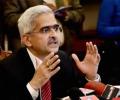
Stating that recent agriculture reforms have opened new opportunities, the RBI Governor said the farm sector is emerging as a bright spot.

These 10 images prove that it's an odd, odd world.
